Se cumplen 68 años del Desembarco de Normandía


ForoCoches: Miembro
09-jun-2012 11:34
#332
|
Piensa tu un poco. lo que dices es un disparate. Son globos cautivos, su unica funcion es para evitar ataques aereos. Los globos se terminaron de usar en la IGM y solo de observacion. para saber donde estaban las unidades los generales solo usaban la radio. PD: no son Zeppelines esto es un zeppelin  y esto un globo cautivo que es lo que sale en las imagenes 
|
Editado: 09-jun-2012 11:39 -

ForoCoches: Miembro
09-jun-2012 11:46
#334
| Creo que un M-31,una especie de "tanque grua" basado en el m3 Grant |

ForoCoches: Miembro
09-jun-2012 11:49
#335
|
http://sovietrussia.es/derribando-aviones-con-globos/
La fuente es un poco demigrante, pero lo explica más o menos bien. Era para proteger a la flota de ataques aéreos. Usar globos para saber donde están tus tropas es un disparate. Más cuando tienes radios y observación aérea en las que en pocos segundos sabes el lugar exacto y no te expones a que el enemigo los vea y desencadene una barrera de artillería. |

ForoCoches: Miembro
09-jun-2012 11:59
#337
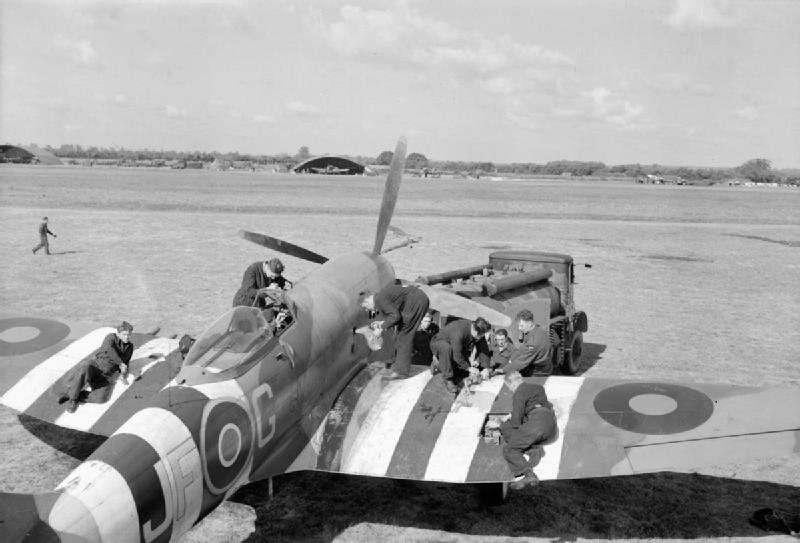
Aviones con las famosas bandas de invasion. C-47  B-26  A-20  P-38  P-47  P-51 Las bandas de invasión eran bandas de color negro y blanco pintadas en los fuselajes y en las alas de los aviones aliados en la Segunda Guerra Mundial, con el propósito de obtener un mejor reconocimiento de fuerzas amigas (y por tanto reducir los incidentes por fuego amigo) durante y después de la Invasión de Normandía (Día D). Las rayas, que consistían en tres bandas blancas y dos negras pintadas de forma alterna, rodeaban la parte posterior del fuselaje del avión justo por delante de la cola y la zona central de las alas por ambas caras |





Florero
09-jun-2012 12:24
#340
|
Alguien sabe donde conseguir este documental del canal historia? Dia-D ( Lo que nunca vimos ) La parte 7 del youtube está borrada. |

Per aspera, Ad astra
09-jun-2012 12:45
#341
Esta es la vista que se tiene desde la posición WN62, justo dentro del bunker que ocupaban Severloh, un oficial y otro hombre que amunicionaba la ametralladora MG42. Me imagino que tendrían que cambiar el cañon varias veces, de lo caliente que se tuvo que poner   Debe haber unos 200-300 metros hasta la orilla, más abajo había varios bunkeres y trincheras, esta posición era la más elevada, ya que realmente la WN62 era un sector de la playa.  El bunker donde estaba la MG42 era muy pequeño, a mi me costó entrar y tampoco mido mucho más de 1,85  . Una vez dentro, pensar que desde allí este hombre causó más de 1.000 bajas Americanas, acojonaba. . Una vez dentro, pensar que desde allí este hombre causó más de 1.000 bajas Americanas, acojonaba. |


ForoCoches: Miembro
09-jun-2012 14:23
#342
| Por muchas veces que vea las fotografías, me siguen impactando... |
ForoCoches: Miembro
09-jun-2012 14:24
#343
|
Pues sí. Y por el empeño en Stalingrado por su simbolismo, cuando lo importante de verdad era Moscú y los campos petrolíferos. Aparte, el despreciar a su mejor estratega, que para mí fue Rommel pues....pasó lo que pasó.
Aparte, estuvieron a puntito de coger la bomba atómica antes y los avances militares eran la polla, pero a Hitler se le fue la olla, en mi opinión, afortunadamente. Hubieran sometido Europa y con la bomba pues ya nadie se atrevería a meterles mano. Y saber lo que hubiera hecho el loco después. De todas maneras, es un tema para debatirlo entre cerveceos varios y sin apuestas ideológicas por medio.
|
ForoCoches: Miembro
09-jun-2012 14:26
#345
|
http://www.taringa.net/posts/videos/2342179/Dia-D---_-Lo-Q-Nunca-Vimos-_-_-Documental-_.html |
topiko
09-jun-2012 14:27
#346
ESPECTACULAR!! creo que es lamejor "recreación" que he visto nunca del desembarco.... 
|
ForoCoches: Miembro
09-jun-2012 14:29
#347
|
Añado un vídeo de la instrucción de los paracaidistas Ingleses y su posterior salto sobre los Países Bajos, las imágenes son sobrecogedoras: |
Florero
09-jun-2012 14:30
#348
|
AQUI lo tienes enterito
http://www.taringa.net/posts/videos/2342179/Dia-D---_-Lo-Q-Nunca-Vimos-_-_-Documental-_.html  Gracias |
ForoCoches: Miembro
09-jun-2012 14:31
#349
|
Y aqui lo tienes en dos partes entero Más de 85 minutos de documental Este creo que esta completo Lo que se puede decir es que la llegada hasta Berlin fue bastante dura aunque al principio parecia que en 4 dias se iba a hacer un desfile triunfal hasta acabar con el Regimen nazi . Lo que esta claro es que rodeada Alemania por los dos frente ( occidental y Oriental ) la derrota al final era evidente -un conglomerado de paises contra el ejercito aleman poco podia hacer... 1ª parte http://tu.tv/videos/el-dia-d-lo-nunca-visto-docuemntal 2ª parte http://tu.tv/videos/el-dia-d-lo-que-nunca-vimos-pate2 |
Editado: 09-jun-2012 14:36 - Razón: e
ForoCoches: Miembro
09-jun-2012 14:40
#350
Por si lo quereis bajar  Tema: Dia D, Lo Que Nunca Vimos(D-Day, The Lost Evidence Dia D, Lo Que Nunca Vimos(D-Day, The Lost Evidence)[2/2][C.Historia][SATRip]
|




Y si cenamos, que ?
09-jun-2012 17:30
#354
|
Esta es la vista que se tiene desde la posición WN62, justo dentro del bunker que ocupaban Severloh, un oficial y otro hombre que amunicionaba la ametralladora MG42. Me imagino que tendrían que cambiar el cañon varias veces, de lo caliente que se tuvo que poner
Debe haber unos 200-300 metros hasta la orilla, más abajo había varios bunkeres y trincheras, esta posición era la más elevada, ya que realmente la WN62 era un sector de la playa. [CENTER] De donde sacaste ese plano ? Tengo un diorama por hacer... |

Florero
09-jun-2012 20:34
#356
|
3 opciones de enlace para bajar Se agradece 
|
*AutoBan Spam/Flood/Troll*
09-jun-2012 23:00
#358
|
Esta es la vista que se tiene desde la posición WN62, justo dentro del bunker que ocupaban Severloh, un oficial y otro hombre que amunicionaba la ametralladora MG42. Me imagino que tendrían que cambiar el cañon varias veces, de lo caliente que se tuvo que poner
Debe haber unos 200-300 metros hasta la orilla, más abajo había varios bunkeres y trincheras, esta posición era la más elevada, ya que realmente la WN62 era un sector de la playa. El bunker donde estaba la MG42 era muy pequeño, a mi me costó entrar y tampoco mido mucho más de 1,85 . Una vez dentro, pensar que desde allí este hombre causó más de 1.000 bajas Americanas, acojonaba.Estuve allí el año pasado y vi muchísimos bunkers y trincheras, pero me fuí con la sensación de no haber visto ni la mitad. |

Y si cenamos, que ?
09-jun-2012 23:15
#360
|
ya lo encontre : http://www.pbase.com/batard/dday_normandy_1944 Strongpoint WN62 was located on the bluffs on the western shoulder of the E-3 Colleville draw. The combat actions by this strongpoint are covered in more detail in the text. The strongpoint was typical of those on Omaha beach. The position was roughly 250m (800ft) in diameter and 12 to 50m (40 to 165ft) in elevation over the beach below. The initial defences (A) featured a sequence of beach obstructions including Belgian gates, ramps with Teller mines, Czech hedgehogs, stakes and scattered anti-personnel mines. There was little cover for US assault troops until they reached the seawall (B), which was about 1.5m (5ft) high. The next defensive barrier was an anti-tank ditch (C) 1.5m (5ft) deep and 2m (7ft) wide, filled with water and covered by two static remotely operated flamethrowers (D) at the eastern corner. The perimeter of the strongpoint was ringed by a barbed-wire fence (E). There were four main concentrations of structures and bunkers in the strongpoint. At the north-eastern corner (F) was a cluster of field entrenchments intended to cover the anti-tank trap and the access into the Colleville draw. The main weapon here was a pedestal-mounted 50mm gun and it was covered by two Polish 7.92mm water-cooled machine guns in trenches. Slightly to the east of the position was an old resort villa (G) that the strongpoint used as a canteen for preparing meals. In the northwest corner of the strongpoint there was a tobruk (H) with an MG34 machine gun guarding the access to the strongpoint and, further up the hill, were the two H669 enfilade gun bunkers (I) with 7Smm field guns that fired along Omaha Beach to the northwest. Midway up the bluff was the command center of the strongpoint including the artillery observation bunker and its associated radio bunker. This area was protected by three MG34 machine guns in trenches, one on an anti-aircraft mount. There was a pair of 50mm mortar tobruks (K) up the bluff from the upper field gun casemate, to provide fire support for the forward positions. The final concentration of emplacements in the strongpoint were on the crest of the bluff  and included a 20-man bunker for the garrison, another 50mm mortar tobruk and a bunker containing the signalling equipment used to communicate with neighbouring WN61 on the other side of the draw. On the south-eastern side of the position was a single 50mm pedestal gun in a field entrenchment (M) to cover the rear of the position. and included a 20-man bunker for the garrison, another 50mm mortar tobruk and a bunker containing the signalling equipment used to communicate with neighbouring WN61 on the other side of the draw. On the south-eastern side of the position was a single 50mm pedestal gun in a field entrenchment (M) to cover the rear of the position.
|